


Laguna Ritual Teas
Night Calm Tea
Night Calm Tea
Herbal support for restful sleep, evening calm & nighttime balance
Couldn't load pickup availability


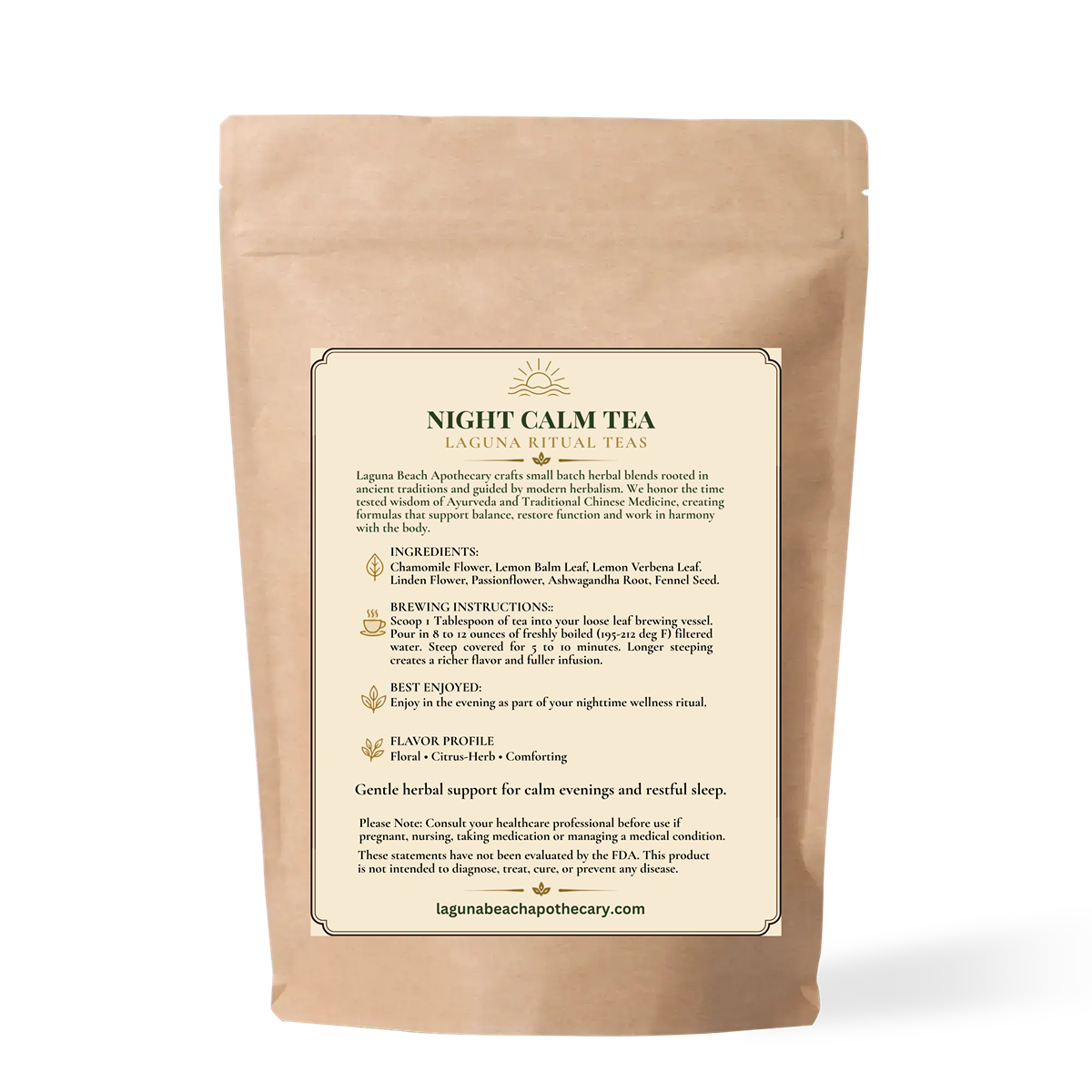

A Gentle Herbal Ritual for Restful Evenings
Evening is a natural transition point in the body's daily rhythm. Throughout the day, we move through work, relationships, responsibilities, information, and the many demands that life places on us. By evening, the nervous system needs an opportunity to gradually shift away from activity and toward rest.
Night Calm is a caffeine-free herbal tea created around that transition. Rather than treating sleep as something to force, we wanted to bring together herbs with different but complementary traditional qualities—herbs associated with calm, relaxation, nervous-system support, gentle digestion, and the transition toward rest.
That is why we brought these particular herbs together. Each contributes something different to the character of the blend, creating layers of aromatic, soothing, restorative, and gently digestive qualities within the cup.
Chamomile, lemon balm, lemon verbena, linden flower, passionflower, ashwagandha, and fennel come together in a blend designed to accompany the natural transition from the activity of the day toward the quiet of the evening.
The transition into sleep begins before we get into bed. Dimming the lights, stepping away from screens, finishing the day's activity, and giving yourself a little quiet time can help create a more natural bridge between being awake and being ready for sleep. These simple habits are easy to overlook, but consistency can matter more than perfection.
Our approach is simple: create a ritual that helps the day come to a close. Night Calm is designed to become part of that transition—a warm cup enjoyed while the day winds down, giving you a simple ritual to return to each evening.
A warm cup of tea cannot replace healthy sleep habits, but the quiet act of preparing and enjoying it can become part of the rhythm that tells the body and mind that it is time to slow down.
Night Calm is more than a bedtime tea. It is a moment to step away from the activity of the day and make room for rest.
Why These Herbs
Night Calm brings together seven herbs with long histories of traditional use around calm, relaxation, digestion, restoration, and evening rest. Each herb has its own character, but the formula is designed around how those different qualities complement and support one another, creating a balanced blend for the transition from day into evening.
Chamomile provides the soft floral foundation of the blend. Familiar, gentle, and slightly sweet, chamomile has been part of European herbal traditions for centuries. Traditionally valued for relaxation and digestion, it gives Night Calm a soothing beginning and a naturally comforting character.
Lemon Balm brings a fresh, lemony brightness to the cup. Traditionally used in European herbal practice for calm, digestion, and emotional balance, lemon balm keeps the blend light and inviting while complementing the softer floral herbs.
Lemon Verbena adds another layer of citrus character. Its fragrant leaves have traditionally been used as an aromatic digestive and calming herb. The bright, clean quality of lemon verbena gives the blend a little lift and helps balance the deeper herbal notes.
Linden Flower contributes a delicate floral sweetness and a gentle, soft character. Long used in European herbal traditions, linden has traditionally been associated with relaxation and evening preparations. In Night Calm, it helps weave the brighter citrus herbs into the softer floral foundation.
Passionflower brings a deeper herbal quality to the formula. Traditionally associated with relaxation and the nervous system, passionflower has a distinctive botanical character that gives the blend more depth without overpowering the gentler herbs around it.
Ashwagandha Root provides the grounding element of the formula. Deeply rooted in Ayurvedic herbal practice, ashwagandha has traditionally been regarded as a restorative herb associated with strength, resilience, and renewal. Its earthy root character gives Night Calm a deeper foundation beneath the lighter flowers and aromatic leaves.
Fennel Seed brings warmth, gentle sweetness, and a subtle digestive quality. Traditionally used as an aromatic digestive herb, fennel is particularly well suited to an evening blend because of its naturally sweet flavor and its ability to complement the floral and citrus notes.
Together, these seven herbs create a progression through the cup. Chamomile and linden bring softness. Lemon balm and lemon verbena add brightness. Passionflower brings depth. Ashwagandha adds grounding, while fennel brings warmth and gentle sweetness.
The result is a thoughtfully layered herbal blend in which each plant has a distinct place. Rather than asking one herb to carry the formula, we bring together seven different botanical characters to create a tea suited to the natural transition from day into evening.
The Herbs
-

Chamomile Flower
Sleep Quality • Staying Asleep • Calm Support • Digestive Support
-

Lemon Balm
Sleep Quality • Calm Support • Nervine • Digestive Support
-

Lemon Verbena Leaf
Sleep Quality • Sleep Efficiency • Relaxation • Aromatic
-

Linden Flower
Evening Calm • Relaxation • Floral • Traditional Nervine
-

Passionflower
Sleep Quality • Sleep Duration • Nervine • Relaxation
-

Ashwagandha Root
Sleep Quality • Restorative • Adaptogenic • Ayurvedic
-

Fennel Seed
Digestive Support • Warming • Naturally Sweet • Evening Comfort


The Cup
Night Calm begins with the soft floral character of chamomile, bringing a gentle sweetness and familiar warmth to the cup. Lemon balm and lemon verbena follow with fresh, lemony notes that brighten the infusion without making it feel sharp.
Linden flower adds a delicate floral softness, while passionflower brings a deeper herbal character beneath the brighter aromatics. Ashwagandha gives the cup a subtle earthy foundation, and fennel seed rounds everything out with gentle warmth and natural sweetness.
As the herbs come together, the cup moves from light and floral to fresh, softly herbal, and gently earthy, with fennel leaving a warm, slightly sweet finish.
The result is a soothing, layered infusion that feels naturally suited to the evening—aromatic enough to be interesting, gentle enough to become part of a nightly ritual.
Floral • Lemony • Soft • Herbal • Gently Sweet • Warm • Earthy • Smooth
A Closer Look
How to Brew
Scoop 1 tablespoon of Night Calm into your loose-leaf herbal tea brewing vessel.
Pour 8–12 ounces of freshly boiled water over the herbs.
Steep covered for 10–15 minutes.
Because Night Calm contains ashwagandha root along with delicate flowers and aromatic leaves, a longer covered steep allows the root to infuse more fully while helping retain the fragrant qualities of chamomile, lemon balm, and lemon verbena.
Strain and enjoy warm.
For a lighter, more delicate cup, use a shorter steep. For a fuller infusion with deeper herbal character, allow the tea to steep toward the longer end of the range.
One tablespoon • 8–12 oz water • 10–15 minute steep
When to Enjoy
Night Calm is designed to become part of your evening rhythm, making it a natural bedtime herbal tea to enjoy as the day begins to slow down and you prepare for sleep.
Try a cup 30–60 minutes before bed, giving yourself enough time to enjoy the tea without rushing through the evening. This can become a simple signal that the active part of the day is coming to an end.
You might also enjoy Night Calm after dinner, particularly on evenings when you want to create a little more space between the day's activity and bedtime. Dim the lights, step away from screens, settle into a comfortable place, maybe open a book and let the tea become part of that transition.
The ritual matters as much as the timing. Night Calm is meant to be something you return to consistently, helping create a familiar rhythm around the end of the day.
You don't have to make the evening elaborate. A warm cup, a quieter room, and a few minutes without the demands of the day can be enough.
A simple evening ritual for slowing down, settling in, and transitioning naturally toward sleep.
Ingredients
Chamomile Flower — One of the most familiar herbs in Western herbalism, chamomile brings a soft floral aroma with a naturally gentle sweetness. Traditionally valued as both a nervine and digestive herb, it has long been used in evening preparations for relaxation and comfort. In Night Calm, it creates the soft floral foundation of the blend.
Lemon Balm Leaf — Fresh, bright, and naturally lemony, lemon balm has a long history in European herbal traditions. Traditionally used as a gentle nervine and digestive herb, it has been valued for calm, relaxation, and emotional balance. Its fresh character brings brightness to the blend while complementing the softer floral herbs.
Lemon Verbena Leaf — Fragrant and distinctly citrusy, lemon verbena has traditionally been used as an aromatic digestive and calming herb. Its clean, lively character adds another layer of citrus to the cup, helping balance the deeper herbal notes while keeping the blend fresh and inviting.
Linden Flower — Delicate, lightly sweet, and softly floral, linden has been treasured in European herbal traditions for generations. Traditionally regarded as a gentle nervine, it has been used in preparations for relaxation and evening calm. Its soft floral character helps bridge the brighter citrus herbs with the deeper botanicals in Night Calm.
Passionflower — A distinctive climbing vine with delicate flowers, passionflower has a long history of traditional use as a calming nervine, particularly in preparations intended for relaxation and rest. Its deeper herbal character gives Night Calm another layer beneath the softer floral and citrus notes.
Ashwagandha Root — Earthy and grounding, ashwagandha has a longstanding place in Ayurvedic herbal practice, where it has traditionally been regarded as a restorative and strengthening herb. Its root brings depth and a more grounded character to Night Calm, complementing the lighter flowers and aromatic leaves.
Fennel Seed — Warm, naturally sweet, and aromatic, fennel has a long history as a carminative herb, traditionally used to support comfortable digestion and ease digestive tension. Its gentle sweetness rounds out the brighter citrus notes and gives Night Calm a warm, satisfying finish.
Together, the seven herbs give Night Calm a progression of soft floral, bright citrus, deeper herbal, earthy, and gently sweet qualities—each plant contributing something different to the character of the blend.
Caffeine
Naturally caffeine-free herbal tea.
Night Calm is made entirely from chamomile, lemon balm, lemon verbena, linden flower, passionflower, ashwagandha root, and fennel seed—none of which naturally contain caffeine.
That makes it a natural choice for the evening, when you may want something warm and flavorful without introducing a stimulant into your nighttime routine.
There is also something appealing about the simplicity of the formula: seven whole herbs, no added caffeine, and nothing to interfere with the quiet character of an evening cup.
Caffeine-free • Whole-herb infusion • Evening-friendly
Flavor & Aroma
Night Calm has a naturally soft and aromatic character, beginning with the familiar floral sweetness of chamomile. Lemon balm and lemon verbena bring fresh citrus notes that brighten the blend, while linden flower adds a delicate floral sweetness of its own.
Beneath those lighter aromatics, passionflower contributes a deeper herbal quality, with ashwagandha root adding an earthy foundation. Fennel seed rounds out the blend with gentle warmth and a naturally sweet finish.
The overall character is soft and floral with fresh citrus, deeper herbal notes, and a warm, subtly sweet finish—a combination that feels particularly natural in the evening.
Floral • Lemony • Soft • Herbal • Gently Sweet • Warm • Earthy • Smooth
Herbal Research
Night Calm brings together several herbs that have a long history of traditional use for evening calm, relaxation, digestion, and restful sleep. Many of these same plants have also been investigated in modern research, creating an interesting meeting point between traditional herbal practice and contemporary sleep science.
Chamomile has one of the more developed research histories in the formula. Clinical research has explored its relationship to sleep quality, relaxation, and nighttime awakenings. Reviews of the available research suggest improvements in overall sleep-quality measures, with some evidence pointing toward particular benefits around staying asleep and nighttime awakenings. Other measures, including total sleep duration and sleep efficiency, have been less consistent.
Lemon balm and passionflower have also been studied in connection with relaxation and sleep. Research has explored both subjective sleep quality and the relationship between relaxation, nervous-system activity, and the ability to settle into sleep. Passionflower is particularly interesting because some human research has examined measurable aspects of sleep alongside participants' own reports of how well they slept.
Lemon verbena is a newer addition to the sleep research conversation. Emerging human research has examined several dimensions of sleep, including sleep quality, the time it takes to fall asleep, sleep efficiency, nighttime wakefulness, and awakenings. Its traditional aromatic and calming character is now being explored alongside measurable aspects of sleep.
Ashwagandha brings a somewhat different body of research to the formula. Rather than being studied only as a traditional sleep herb, it has been investigated in relation to stress, relaxation, and sleep together. Reviews of randomized trials have found improvements in overall sleep measures, with some of the more pronounced findings appearing in people experiencing sleep difficulties and in studies using longer treatment periods.
The broader research is interesting because these herbs do not all approach nighttime support from the same direction. Some research focuses directly on sleep quality and sleep maintenance. Other work looks at relaxation, stress, nervous-system activity, or the transition into sleep. Herbs such as linden and fennel contribute another dimension, drawing primarily on their long histories of traditional use, particularly around relaxation and comfortable digestion.
That gives us a more complete picture of why these plants work so naturally together in an evening formula.
Chamomile and passionflower bring a long tradition of evening use alongside modern sleep research. Lemon balm and lemon verbena add aromatic, calming qualities with growing research around sleep and relaxation. Ashwagandha brings its restorative Ayurvedic tradition and research connecting stress and sleep. Linden contributes its gentle floral and traditional nervine character, while fennel brings warmth and digestive comfort.
Much of the modern research on these herbs uses standardized extracts or concentrated preparations rather than a traditional cup of whole herbs. We view that research as a way of understanding the plants and their potential, while recognizing that a whole-herb infusion is its own preparation.
Traditional herbal knowledge gives us centuries of experience with these plants, while modern research gives us new ways to explore their chemistry and relationship to the human body.
Night Calm brings those two perspectives together in a simple evening ritual—seven whole herbs, each with its own history and character, thoughtfully combined for the transition from day into night.
The Whole Herb
TThere is a reason we work with whole herbs rather than reducing a plant to a single isolated compound.
A plant is more than any one constituent within it. Its leaves, flowers, roots, and seeds contain a naturally complex combination of compounds that exist together within the plant. Modern research often isolates individual constituents so they can be studied more closely, and that work can teach us a great deal about plant chemistry. But an isolated compound does not necessarily represent the full character of the whole plant.
The chemistry of a whole herb is more complex than any single compound. Different constituents may interact with one another and contribute different qualities to the plant's overall activity. This complexity is one reason traditional herbal practice has worked with whole plants for centuries, using them individually and in carefully considered combinations.
This doesn't mean a whole herb is always more effective than an isolated compound. It means that there is more to a plant than any single chemical within it, and that complexity is part of what makes herbal medicine so fascinating.
Night Calm reflects that way of thinking.
Chamomile brings its aromatic flowers and naturally occurring plant compounds, along with centuries of traditional use. Lemon balm and lemon verbena contribute their fragrant leaves and naturally occurring aromatic constituents. Linden and passionflower bring the distinctive chemistry of their flowers and leaves, while ashwagandha contributes the deeper character of its root. Fennel adds the naturally aromatic compounds found within its seeds, along with its characteristic warmth and sweetness.
Each plant arrives with its own chemistry, history, and traditional identity.
And then something interesting happens when they are brought together.
The formula becomes more than a list of ingredients. It becomes a conversation between plants.
We value whole herbs because they preserve that complexity. A cup of Night Calm isn't built around one isolated compound or one single botanical idea. It brings together flowers, leaves, roots, and seeds, each contributing something different to the character of the infusion.
Much of modern herbal research examines extracts or individual compounds because those preparations allow researchers to study specific aspects of a plant more precisely. A whole-herb tea is different—and that difference is worth respecting.
There is still much we don't understand about the relationships between the many compounds found within a plant, or how those compounds interact when several whole herbs are brought together.
That mystery is part of what keeps herbalism so interesting.
Seven plants. Different parts of the plant. Different histories. Different botanical characters.
One thoughtful evening infusion.
Traditional Use
The herbs in Night Calm come from several traditions of plant use, with particularly strong roots in European herbal medicine, Ayurveda, and the broader herbal traditions of the Mediterranean and Asia. What makes the formula interesting is that each plant arrived through its own history, with its own traditional role.
Chamomile has been used for thousands of years, with records of its use reaching back to ancient Egypt, Greece, and Rome. Across European and Mediterranean traditions, the flowers became valued for their relationship to digestion, relaxation, and everyday comfort. Chamomile tea eventually became one of the most familiar forms of traditional herbal infusion, and its gentle floral character has made it a natural part of evening rituals for generations.
Lemon balm has an equally interesting history. Native to the Mediterranean and western Asia, it was cultivated and used throughout Europe for centuries. Its traditional uses centered around the nervous system and digestion, and it became especially associated with calming preparations and evening teas. The European herbal tradition continues to recognize lemon balm for mild mental stress, sleep support, and digestive complaints based on its long history of traditional use.
Lemon verbena brings a different cultural history to the formula. Native to South America and now cultivated widely around the world, its fragrant leaves have traditionally been prepared as an infusion for digestion, relaxation, and nervous-system support. In parts of Latin America, lemon verbena tea remains a familiar traditional preparation, valued as much for its refreshing aroma as for its herbal qualities.
Linden flower has deep roots in European herbal practice. The delicate flowers and bracts have traditionally been prepared as teas associated with relaxation, nervous-system support, and the quieting of the body, particularly in evening preparations. Linden's soft floral character makes it an especially natural bridge between the brighter aromatic herbs and the deeper plants in Night Calm.
Passionflower comes from a very different botanical and cultural background. Native to the Americas, Passiflora incarnata eventually became part of Western herbal practice and was traditionally used for nervous tension, relaxation, and sleep. European and South American herbal traditions both developed uses for the plant, giving passionflower a distinctive place among traditional nervine herbs.
Ashwagandha connects Night Calm to the much older traditions of Ayurveda. Known as Withania somnifera, the root has been used in Ayurvedic practice for centuries as a Rasayana—a class of preparations traditionally associated with restoration, vitality, strength, and resilience. Rather than being viewed simply as a sleep herb, ashwagandha has traditionally been used more broadly to support the body during periods of physical and mental demand.
Fennel seed has its own long history as an aromatic digestive herb. Used across Mediterranean, European, Middle Eastern, and Asian traditions, fennel has traditionally been prepared after meals and in herbal formulas centered around comfortable digestion, warmth, and the movement of the digestive system. Its naturally sweet flavor also made it a useful companion to stronger-tasting medicinal herbs.
What I find most interesting about these traditions is that they don't all describe the herbs in the same way. European herbalism developed its own language around nervines, digestive herbs, and evening preparations. Ayurveda placed ashwagandha within the broader philosophy of restoration and Rasayana. Traditional practices in the Americas developed their own relationship with plants such as passionflower and lemon verbena.
We don't need to force all of those traditions into one system.
Instead, we can appreciate what each one has taught us about the plants.
Chamomile brings centuries of European herbal tradition. Lemon balm and linden carry deep European histories. Lemon verbena and passionflower connect us to the herbal traditions of the Americas. Ashwagandha brings the perspective of Ayurveda, while fennel crosses cultures as one of the world's enduring aromatic digestive herbs.
Night Calm is simply our way of bringing these different botanical histories together in one thoughtful evening infusion.
The plants have their own history. Our formula is simply a way of bringing some of that knowledge into a thoughtful cup.