


Laguna Ritual Teas
Metabolic Reset Tea
Metabolic Reset Tea
Herbal support for metabolic balance, energy & daily rhythm
Couldn't load pickup availability


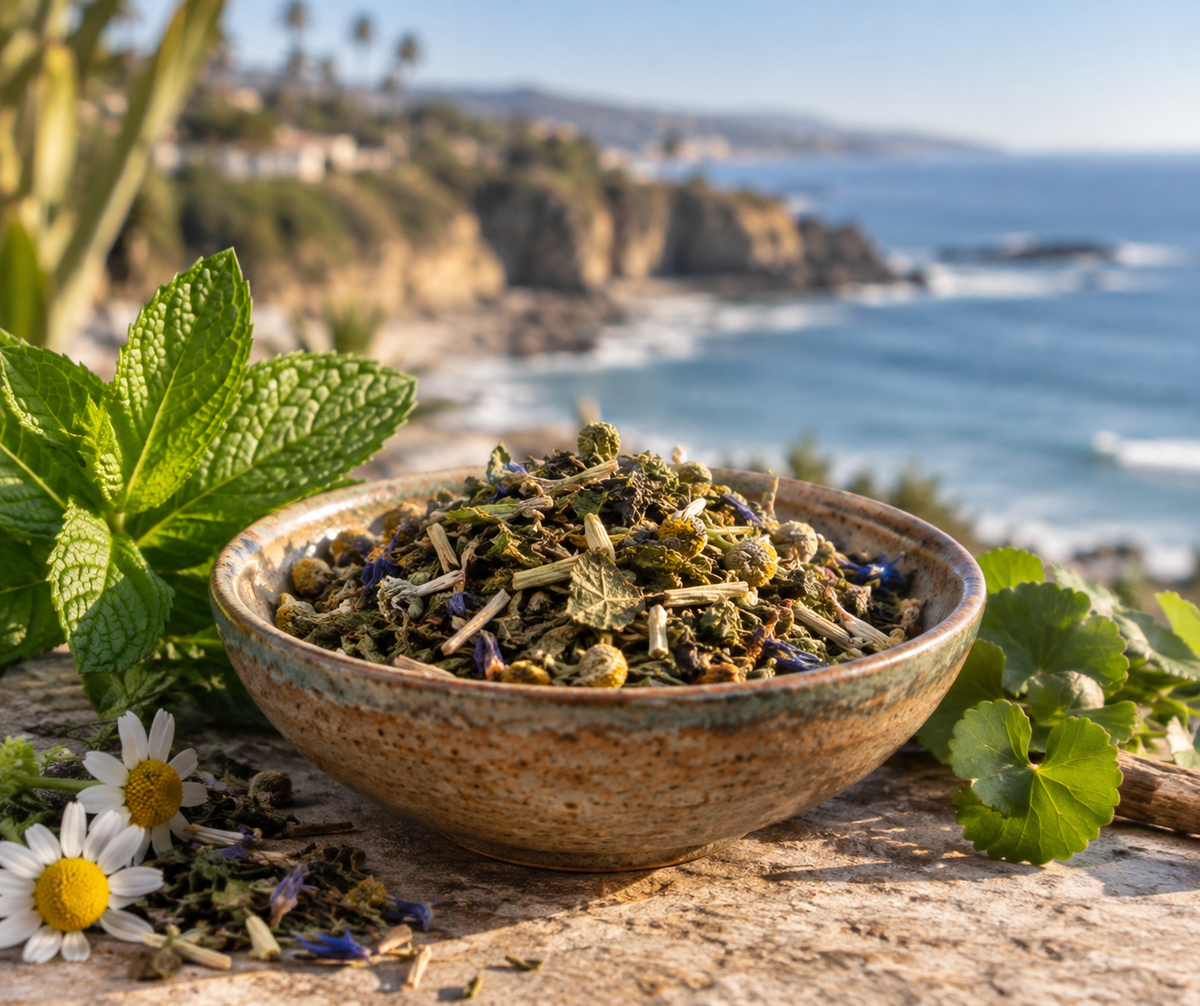

When your daily rhythm needs a little more balance
Metabolic health is part of a much larger picture than simply how quickly the body uses energy. It is woven into the way we respond to food, maintain energy throughout the day, regulate blood sugar, and adapt to the changing demands of daily life. Like so many of the body's systems, metabolism works best when it has the support and rhythm it needs.
We created Metabolic Reset with that broader perspective in mind. Rather than designing a tea around the idea of forcing the metabolism to work harder, we wanted a blend that could become part of a consistent daily practice—one that supports the body's natural processes while providing a naturally caffeinated cup to begin the day.
Our approach is simple: support the system rather than chase the symptom. A healthy metabolic rhythm is influenced by many things, including what we eat, how we move, how well we sleep, and the rhythms we establish around our daily lives. An herbal tea cannot replace those foundations, but it can become one small, meaningful part of them.
Metabolic Reset is our expression of that philosophy—a thoughtful daily blend created to support metabolic balance, natural energy, and the steady rhythm of everyday life.
A simple ritual for supporting the body’s natural rhythm, one cup at a time.
Why These Herbs
Metabolic Reset was built around the idea that a useful daily formula doesn't need to rely on one “hero” herb. Each plant was chosen for a particular place within the blend, with the intention of creating something balanced, approachable, and easy to return to every day.
Green tea provides the foundation, bringing naturally occurring catechins, polyphenols, and caffeine to a blend created around metabolic and antioxidant support. Rooibos complements it with a naturally caffeine-free source of plant compounds, helping broaden the botanical profile of the formula without adding additional stimulation.
Hibiscus was included for its rich polyphenol content and long history of traditional use, particularly in preparations associated with cardiovascular and circulatory health. Ginger adds a warming botanical traditionally valued for digestion and circulation, while cinnamon brings another important dimension, with traditional use and modern research exploring its relationship with healthy blood sugar and metabolic function.
Together, these herbs create a formula that approaches metabolic support from several directions. Green tea establishes the active foundation, rooibos broadens the plant chemistry, hibiscus supports the cardiovascular dimension, and ginger and cinnamon bring additional metabolic and digestive support.
The herbs were chosen not simply for what each can do individually, but for how their different qualities can work together within a single daily formula.
The Herbs
-

Rooibos Aerial Parts
Metabolic Support • Polyphenol-Rich • Antioxidant • Glucose Metabolism
-

Green Tea
Metabolic Support • Catechin-Rich • Antioxidant • Naturally Caffeinated
-

Hibiscus Flower
Cardiometabolic Support • Polyphenol-Rich • Antioxidant • Circulatory Support
-

Ginger Root
Metabolic Support • Circulatory Support • Digestive Support • Antioxidant
-

Cinnamon Bark
Metabolic Support • Glucose Balance • Polyphenol-Rich • Antioxidant
-

Ginkgo Biloba
Memory • Circulation • Cognitive Function • Antioxidant Support
-

Licorice Root
Anti Inflammatory • Antioxidant • Neuroprotection • Formula Harmonization


The Cup
Metabolic Reset opens with the smooth, naturally sweet character of rooibos, followed by the bright, gently tart note of hibiscus. Together, they give the cup a refreshing quality and a naturally rounded foundation.
Green tea settles into the background, bringing a clean botanical note and the gentle stimulation of natural caffeine. Ginger and cinnamon then warm the cup, adding aromatic depth and a softly spiced finish that balances the brighter notes of rooibos and hibiscus.
The result is a refreshing yet warming tea—bright enough to start the morning, with enough depth and body to make it satisfying as an everyday ritual.
Smooth • Bright • Gently Tart • Warm • Spiced • Naturally Sweet • Refreshing
A Closer Look
How to Brew
Scoop 1 tablespoon of tea into your loose-leaf brewing vessel.
Pour 8–12 ounces of freshly boiled, filtered water (195–212°F) over the herbs.
Steep covered for 5–10 minutes.
A longer steep creates a richer flavor and fuller infusion. Covering the vessel helps retain the aromatic qualities and essential oils of the herbs as they steep.
When to Enjoy
Brain Clarity Tea can be enjoyed whenever you want to support a clear,
focused state of mind. Many people may find it especially fitting in the
morning, before mentally demanding work, or during the afternoon when attention
begins to fade.
Because Brain Clarity is designed to become part of a consistent daily
practice rather than a quick fix, it can be enjoyed whenever your day calls for
greater clarity and focus.
Ingredients
Peppermint Leaf
Bright and cooling, peppermint gives the blend its fresh character and is
traditionally valued for digestive and nervous-system support.
Lemon Balm Leaf
A gentle aromatic herb traditionally used for calm, mood, and nervous-system
support.
Eleuthero Root
An adaptogenic root traditionally valued for resilience, stamina, and the
ability to meet physical and mental demands.
Gotu Kola Leaf
Traditionally used in connection with memory, mental clarity, and
nervous-system support.
Schisandra Berry
A distinctive botanical traditionally valued for resilience, concentration,
mood, and overall vitality.
Ginkgo Leaf
Traditionally associated with memory, cognitive function, and healthy
circulation to the body and brain
Licorice Root
Adds natural sweetness and is traditionally used as a harmonizing herb in herbal formulas.
Caffeine
Naturally caffeine-free.
Brain Clarity contains no caffeinated tea leaves or other caffeinated
ingredients.
Unlike many teas associated with focus and mental clarity, this blend relies entirely on herbs rather than caffeine to create its character and purpose.
That makes it a versatile choice throughout the day, including later in the
afternoon or evening when you want to avoid caffeine.
Flavor & Aroma
Fresh, minty, and gently sweet, with a clean peppermint aroma, soft herbal notes from lemon balm, and subtle earthy depth from the deeper roots and adaptogenic herbs. Licorice adds a smooth, natural sweetness that rounds the blend.
Herbal Research
Brain Clarity brings together herbs with long histories of use in traditional herbal medicine and a fascinating range of modern research. Researchers have explored these plants in relation to attention, memory, mental fatigue, stress adaptation, circulation, mood, and neurological function.
The research is especially interesting because the herbs approach mental clarity from different directions. Some have been studied in human trials, while others have primarily been explored through laboratory and preclinical research. Together, they offer a deeper look at why these particular plants have earned their place in herbal traditions around the world.
Peppermint
Peppermint is more than the bright, refreshing herb that opens the cup. Its aromatic compounds, particularly menthol, have been studied for their relationship with alertness, attention, and mental performance.
Human research has explored peppermint preparations in connection with cognitive performance and mental fatigue, including research involving peppermint tea. These findings add an interesting modern dimension to a plant that has traditionally been valued for its ability to refresh the senses.
In Brain Clarity, peppermint provides both a sensory and functional foundation—a fresh, aromatic beginning to the formula that makes the daily ritual feel naturally invigorating.
Lemon Balm
Lemon balm has attracted considerable research interest for its relationship with mood, stress, attention, and memory. Human studies using standardized lemon balm preparations have reported changes in aspects of cognitive performance and mood, although results vary according to preparation, dose, and study design.
Laboratory research has also explored lemon balm's interaction with pathways involved in memory and attention.
What makes lemon balm particularly interesting is the way its traditional use and modern research converge around a similar idea: clarity does not always come from stimulation. Sometimes it comes from creating a calmer mental environment in which attention can settle.
Gotu Kola
Gotu kola (Centella asiatica) has a long history in Ayurvedic and Asian herbal traditions and has become an important subject of modern botanical research.
Researchers have studied constituents such as asiaticoside, madecassoside, and asiatic acid in relation to antioxidant
activity, inflammation, neuronal function, collagen production, and neuroprotection. Human research has also explored gotu kola in connection with mood, alertness, and cognitive performance.
The clinical evidence is still developing, but the breadth of research helps explain why this plant has remained important across traditional systems of herbal medicine.
In Brain Clarity, gotu kola brings a restorative dimension to the formula—one that complements the more immediately aromatic and invigorating herbs.
Eleuthero
Eleuthero (Eleutherococcus senticosus) has one of the most fascinating modern histories among the herbs in Brain Clarity.
Traditionally used in East Asian herbal practice, eleuthero became the subject of extensive Soviet research beginning in the mid-20th century. Soviet scientists were particularly interested in plants that
might help people adapt to demanding conditions, and eleuthero was investigated in relation to stamina, endurance, fatigue, work capacity, and mental performance. A modern review of previously inaccessible Soviet literature
identified 46 human clinical studies conducted between 1962 and 1986.
Its story eventually extended beyond the laboratory.
Eleuthero became associated with Soviet athletic research, where scientists
explored its potential relationship with endurance and performance. It also
found a place in the Soviet space program. Historical NASA records describe Salyut 6 crews taking Eleuthero preparations during long-duration missions, reflecting Soviet interest in maintaining stamina under the unusual physical and psychological demands of spaceflight.
That history should not be interpreted to mean that Eleuthero was responsible for Olympic victories or that it was proven to
improve performance in space. Later controlled studies have produced mixed
results.
What remains genuinely interesting is the question that drew so much attention to the plant in the first place: how does the
human body adapt when ordinary demands become extraordinary?
Modern research continues to explore eleuthero in relation to fatigue, stress response, mental endurance, and resilience.
For Brain Clarity, it brings a long tradition of thinking about mental stamina and
adaptation into a formula designed for the demands of modern life.
Schisandra
Schisandra (Schisandra chinensis) has been valued for centuries in traditional East Asian herbal practice and is one of
the more chemically complex plants in the formula.
Its lignans and other naturally occurring compounds have been studied for antioxidant, neuroprotective, and stress-response activity.
Experimental research has explored relationships with learning, memory,
neuronal protection, and adaptation to physiological stress.
Much of this research remains preclinical, but it offers an intriguing scientific perspective on a plant traditionally valued for endurance, vitality, and resilience.
Within Brain Clarity, schisandra contributes depth to the formula while complementing the adaptogenic character of eleuthero and the
more aromatic herbs.
Ginkgo Biloba
Ginkgo is perhaps the most familiar “brain herb” in the formula, but its research story is more interesting than the popular
memory-enhancement claims often suggest.
Ginkgo leaves contain flavonoids and terpene lactones that have been extensively studied for their antioxidant, vascular, and neurological activity. Researchers have investigated standardized ginkgo extracts in relation to memory and cognitive function in both healthy adults and people experiencing cognitive decline.
The results have been mixed. That does not make the plant uninteresting. Quite the opposite: its long history of traditional use and extensive scientific investigation have made it one of the most thoroughly studied botanical ingredients associated with brain health.
In Brain Clarity, ginkgo contributes to the formula's broader botanical approach to cognitive and circulatory wellness rather than being asked to act as a single-purpose “memory herb.”
Licorice Root
Licorice root has been used across many herbal traditions and is often valued as a harmonizing herb within formulas. Its
naturally occurring constituents, including glycyrrhizin and a range of
flavonoids, have been studied for antioxidant, anti-inflammatory, and
neuroprotective activity.
Much of the research concerning licorice and neurological function remains experimental, so these findings should be viewed as an area of scientific interest rather than proof of a cognitive effect from licorice tea.
Licorice also has an important practical role in Brain Clarity. Its natural sweetness helps soften the sharper aromatic notes of peppermint and the deeper character of the roots and adaptogenic herbs, helping bring the formula together as a balanced cup.
The Formula as a Whole
What makes Brain Clarity interesting is not any one herb acting alone.
The formula brings together aromatic herbs, restorative botanicals, adaptogenic plants, antioxidant-rich herbs, and plants with long histories of traditional use for memory, mental endurance, and nervous-system balance.
Some of these herbs have been studied extensively in humans. Others have a stronger foundation in traditional use and experimental research. That distinction is important, but it does not diminish the value of the plants. It gives us a more complete picture of where our understanding stands today.
Traditional herbal knowledge offers centuries of observation: how plants were prepared, which parts were used, what qualities herbalists noticed, and how different plants were combined. Modern science gives us another lens, allowing researchers to examine the chemistry and biological activity of those same plants in increasingly sophisticated ways.
Brain Clarity sits at that intersection.
It is a formula built from traditional herbal knowledge, informed by modern
research, and designed around the idea that caring for the mind can be part of
a daily ritual rather than something reserved for moments when we feel we need it.
The research continues. So does our understanding of these remarkable
plants.
The Whole Herb
There is a reason we work with whole herbs rather than reducing a plant to a single isolated compound.
A plant is more than any one of its constituents. Its leaves, roots, flowers, and seeds contain a complex mixture of naturally occurring compounds that exist together within the plant. Modern research often isolates individual compounds so they can be studied more closely, and this has taught us a great deal about the chemistry of medicinal
plants. But an isolated compound does not necessarily represent the full
character of the plant from which it came.
The chemistry of a whole herb is remarkably complex. Its constituents may interact with one another and contribute different qualities to the overall activity of the plant. Some
compounds may influence absorption or metabolism, while others contribute to
the plant's antioxidant, aromatic, or physiological properties. We are still
learning how much of that complexity matters.
This is one reason traditional herbal practice has continued to work with whole plants for centuries. Herbalists have observed not only individual plants, but also which part of the plant is used, how it is prepared, how much is used, and what happens when different plants are brought together in a formula.
Traditional Use
The herbs in Brain Clarity come from several traditions of herbal practice, including Western herbalism, TCM and Ayurveda. Each has been valued over generations for different qualities and purposes.
Peppermint has a long history of use for digestion, refreshing the senses, and supporting the nervous system. Lemon balm has traditionally been used for calm and emotional balance, while gotu kola has a long history in Ayurvedic practice in connection with memory, clarity, and the nervous system.
Eleuthero and schisandra come from traditional East Asian herbal practice, where they have been valued for resilience, stamina, and adapting to physical and mental demands. Ginkgo has a long history of traditional use for memory and circulation.
Licorice root has been used across many herbal traditions for its soothing qualities, natural sweetness, and its role as a harmonizing herb in formulas.
These traditional uses are part of the herbal knowledge and reasoning behind Brain Clarity Tea. They reflect a long history of observing how plants have been used as part of daily care.